
Choosing the Best Bakery Ingredient Costing Tool for 2026
Have you ever finished a stunning custom order only to realize that after accounting for the recent spikes in butter and flour prices, you essentially worked for free? It's a common frustration for creative entrepreneurs who find themselves trapped in a cycle of manual spreadsheet updates and the constant stress of missing hidden overhead costs. You know that your time is better spent at the cooling rack than the computer, yet the fear of underquoting keeps you tethered to a screen.
Selecting the right bakery ingredient costing tool for 2026 is about more than just finding a calculator; it's about reclaiming your creative energy and ensuring every ounce of flour contributes to a sustainable business. In this guide, you'll learn how to move beyond basic calculations and select a professional platform that tracks ingredients, labor, and profit margins with total precision. We will explore the essential features that transform administrative burdens into a streamlined workflow, allowing you to quote high-end cakes with confidence and spend more time doing what you love most.
Key Takeaways
- Identify the "margin leaks" that drain your profit and learn how a professional system captures every hidden expense.
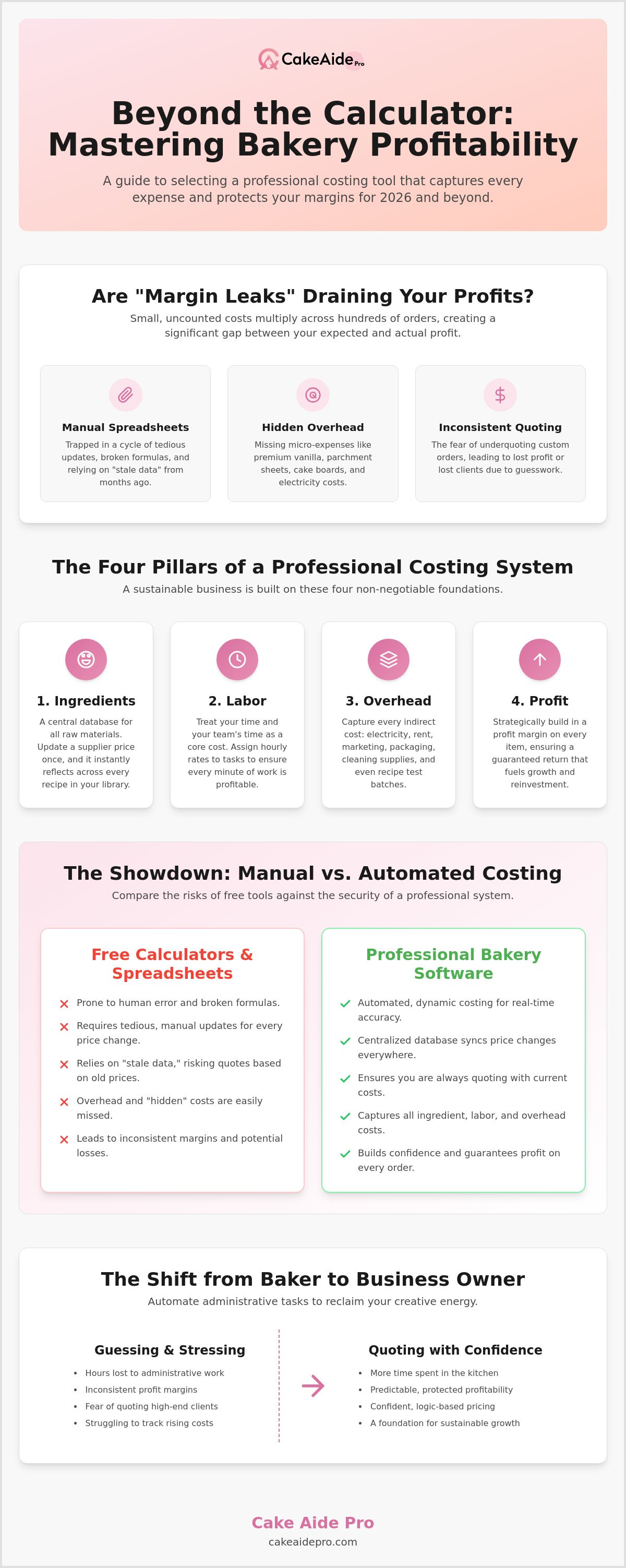
- Master the four pillars of professional costing—ingredients, labor, overhead, and profit—to build a foundation for sustainable growth.
- Compare the risks of free calculators against the security and precision of a dedicated bakery ingredient costing tool.
- Implement a strategic two-step audit of your current pantry to manage volatile ingredient prices with professional confidence.
- Transition from a baker to a business owner by automating administrative tasks and reclaiming your time in the kitchen.
Why Your Bakery Ingredient Costing Tool Defines Your Profitability
If you view your bakery ingredient costing tool as a simple calculator, you might be missing the strategic heartbeat of your business. In the competitive landscape of 2026, a professional tool is no longer just a luxury for large-scale operations; it's a fundamental requirement for any boutique bakery aiming for sustainable growth. It functions as a management platform that bridges the gap between your creative vision and your financial reality. When you move beyond basic addition, you begin to see your recipes as financial assets that require active management to remain profitable.
Profitability often dies in the details. This "Margin Leak" phenomenon occurs when small, recurring oversights go unrecorded. A splash of premium vanilla, a single parchment sheet, or the electricity used for an eight-hour bake might seem negligible on their own. However, when these costs are multiplied across hundreds of orders, they create a significant gap in your expected versus actual profit. A dedicated system ensures these micro-expenses are captured, preventing your hard-earned revenue from slowly trickling away through uncounted overhead.
Relying on manual spreadsheets in 2026 has become a significant liability. Static documents are prone to broken formulas and require tedious manual updates every time a supplier changes their rates. This leads to "stale data" where you're quoting clients based on butter prices from six months ago. Modern platforms utilize dynamic costing, allowing you to update a single ingredient price in one central database and see that change reflected across every recipe in your library instantly. This efficiency helps you mitigate the economic impact of menu costs, which are the resources and time a business must spend simply to adjust its pricing in response to market fluctuations. By automating this process, you stay ahead of the curve without losing hours to administrative data entry.
The Shift from Guessing to Professional Precision
Flat rates for custom cakes are no longer sustainable. With 2026 inflation trends affecting dairy and specialty grains, guessing your prices leads to inconsistent margins and potential losses. When you know your exact profit before you preheat the oven, your professional demeanor changes. You can present a quote to a high-end client with quiet confidence because your numbers are rooted in logic rather than hope. This precision transforms your bakery ingredient costing tool into a powerful negotiation asset, ensuring you never accept a commission that doesn't serve your bottom line.
Identifying the 'Hidden' Ingredients in Your Costs
Professional costing looks far beyond the flour and sugar. You must account for structural elements like cake boards, internal dowels, and the premium packaging that defines your brand experience. It's also vital to factor in test batches and unavoidable wastage within your ingredient database. By linking these costs directly to your business records, you turn a daily administrative task into a strategic advantage for tax preparation and long-term financial planning.
The Anatomy of a Professional Costing System
A professional costing system is built on four non-negotiable pillars: ingredients, labor, overhead, and profit. If you ignore even one of these, your business remains a hobby rather than a sustainable enterprise. While many basic tools focus solely on the pantry, a truly effective bakery ingredient costing tool integrates these elements into a cohesive workflow. This starts with a centralized database where you manage your raw material costs globally. When the price of vanilla beans rises at your supplier, you update it once, and every recipe using that bean adjusts its cost instantly. This global synchronization ensures your margins remain protected without requiring you to audit every single recipe card manually.
Beyond the raw materials, your system must treat labor and overhead as structural components of your pricing. Overhead includes the fixed costs that keep your lights on, while profit is the essential surplus that allows you to reinvest in your growth. By organizing these four pillars into a unified dashboard, you gain a panoramic view of your business health. You stop seeing a cake as just a collection of flour and sugar; you start seeing it as a precision-engineered product with a guaranteed return on investment.
Mastering Ingredient and Unit Conversions
Consistency is the backbone of any professional bakery. If you're still measuring by cups and spoons, you're introducing a margin of error that can fluctuate significantly depending on how tightly the flour is packed. Weight-based costing is superior because it provides an exact, repeatable data point for every batch. This level of precision is especially vital when navigating unit conversion for bakers who work with international recipes or source specialty ingredients from diverse markets. A professional system handles the math for you, allowing you to scale a recipe for a three-tier wedding cake or a dozen cupcakes while keeping your per-unit costs perfectly aligned.
The Labor Factor: Why Time is Your Most Expensive Ingredient
Many business owners forget that their time is a direct cost of goods sold. If you don't account for the hours spent kneading, decorating, or cleaning, you're essentially donating your personal income back into the business. Using a built-in timer allows you to move beyond "estimated" hours and capture the reality of your production schedule. It's helpful to distinguish between active time, such as intricate hand-piping, and passive time, like the hours a sponge spends in the oven. When you learn how to calculate cake prices with labor, you ensure that your hourly rate is a built-in component of every quote. This shift in perspective turns you from a busy baker into a strategic CEO who values every minute spent in the kitchen. To see how these pillars come together in your own kitchen, you might consider starting a 7-day free trial to audit your most popular recipes.
Free Calculators vs. Professional Bakery Management Software
Choosing between a quick web calculator and a dedicated SaaS platform is often the turning point where a hobbyist becomes a business owner. While a free web tool offers an attractive "quick fix" for a single recipe, it rarely supports the long-term growth of a professional brand. The primary drawback of these disconnected tools is the lack of data persistence. If you close your browser tab, your work often vanishes, forcing you to re-enter every flour price and butter weight the next time you need a quote. This repetitive data entry is a hidden tax on your time that prevents you from focusing on higher-level creative tasks.
Security is another critical factor often overlooked when using unencrypted, free sites. Your recipes are your intellectual property; they're the unique trade secrets that define your brand's flavor and texture. Storing this sensitive information on platforms without professional-grade encryption puts your business at risk. In contrast, a professional bakery ingredient costing tool provides a secure, private environment for your data, ensuring your proprietary formulas remain yours alone. This peace of mind allows you to build a digital library of your life's work with total confidence.
Modern professional software also moves with you. Imagine standing in the dairy aisle of a wholesale store and seeing a sudden price hike. With a mobile-responsive platform, you can check your margins right then and there. You don't have to wait until you're back at your desk to know if that price change requires a quote adjustment. This real-time access transforms your phone into a powerful business assistant that keeps you informed wherever your work takes you.
When a Free Tool is Enough (And When It Isn't)
If you only bake for friends once a month, a simple web calculator might suffice. However, once you transition to taking consistent custom orders, the "Hidden Admin Tax" of using disconnected tools begins to outweigh any initial savings. Professional bakers eventually reach a ceiling where manual systems simply can't keep up with the complexity of multiple orders. This is the moment most creators switch to integrated systems like Cake Aide Pro to regain control over their schedule and their sanity.
Integration: Linking Costs to Orders and Clients
The true power of professional software lies in its ability to turn a cost calculation into a polished client quote with a single click. By using a bakery CRM for small shops, you can track customer preferences and order histories alongside your ingredient costs. This integration creates a seamless workflow that automates everything from your shopping list to the final delivery. You stop managing individual spreadsheets and start managing a cohesive system that supports your business from the first inquiry to the final crumb.
Step-by-Step: Auditing Your Ingredient Costs for 2026
Taking control of your finances begins with a clear-eyed look at your pantry. A yearly audit is vital, but in the fast-moving economy of 2026, a quarterly pulse check within your bakery ingredient costing tool is even better. This proactive approach ensures you aren't surprised by a sudden dip in profit at the end of the month. It's about aligning your digital records with the physical reality of your kitchen to maintain total financial clarity.
- Step 1: Conduct a full inventory audit. Don't just guess what's on the shelf. Compare your physical stock against your most recent invoices to find discrepancies in pricing or quantity.
- Step 2: Categorize by volatility. Group items like dairy, eggs, and specialty chocolate as "Volatile" while marking staples like flour or sugar as "Stable." This helps you identify which recipes are most at risk during market shifts.
- Step 3: Update your master database. Enter these fresh rates into your bakery ingredient costing tool. This ensures every quote you send is based on real-world numbers, not outdated estimates.
- Step 4: Review your profit margins. Re-evaluate your labor rates alongside these updated ingredient costs. If your overhead has increased, your pricing must follow suit to protect your bottom line.
Managing Price Fluctuations Without Panic
Price spikes are inevitable, but they don't have to be stressful. Set "Alert Levels" within your system to flag when key ingredient prices rise by more than 10%. This allows you to adjust your quotes before you lose money on a large commission. You can also use CSV exports to compare supplier pricing over a quarterly period. This data gives you the leverage to negotiate better rates or switch suppliers if you notice a consistent upward trend. When you communicate these changes to clients, you can do so with data-backed confidence rather than feeling like you're making excuses for your pricing.
Cleaning Your Recipe Database for Efficiency
A cluttered database slows down your workflow and clouds your judgment. Take the time to archive old recipes that are no longer profitable to produce or don't align with your 2026 brand vision. While you're at it, standardize all your units to grams. This simplifies bulk purchasing and removes the guesswork from scaling recipes up or down. You might also consider organizing your ingredient list by "Shopping Aisle" to save time during procurement. This small change transforms a chaotic grocery run into a methodical, stress-free task. Take the first step toward a more profitable 2026 by starting your 7-day free trial today.
Scaling Your Bakery with Cake Aide Pro
Cake Aide Pro isn't just another digital calculator; it's the bridge that allows you to cross from being a baker to a strategic CEO. While you might have started your journey with a love for flavor and design, scaling a business requires a shift toward logistical excellence. This bakery ingredient costing tool was designed specifically for the "Organized Creative" who needs professional precision without sacrificing the joy of the craft. By automating the most tedious parts of your administration, you gain the headspace to focus on innovation and client relationships. You're no longer just reacting to orders; you're building a sustainable brand with a clear vision of your financial future.
One of the most immediate benefits of this professional system is the automated shopping list feature. Instead of guessing how many kilograms of butter you need for a busy wedding weekend, the system compiles your requirements directly from your confirmed orders. This precision significantly reduces food waste and prevents the stress of last-minute runs to the store for a single forgotten ingredient. It creates a seamless workflow where every quote you send is linked to a production plan. This ensures your kitchen runs with the efficiency of a high-end boutique, even if you're still operating from a home studio.
From Kitchen Table to Boutique Shop Operations
Managing a high-volume wedding season requires more than just talent; it requires a robust order tracker. Cake Aide Pro allows you to visualize your production schedule, ensuring you never overcommit or miss a deadline. Beyond the current week, the system helps you drive repeat revenue through automated birthday and anniversary reminders. These small, thoughtful touches build client loyalty without requiring extra marketing spend. When tax season arrives, you won't need to dig through a shoebox of receipts. A single CSV data export provides your accountant with everything they need, turning a month of stress into a five-minute task.
Your 7-Day Business Transformation
If you're ready to professionalize your operations, the 7-Day Free Trial offers the perfect window for a total business reset. Start by setting up your first five most popular recipes in the Quote Calculator to see your true margins. Use the built-in labor timer on your next custom order to finally understand the real cost of your time. This week-long experience allows you to feel the calm reliability of a streamlined process. You'll move from the kitchen table to a professional mindset, knowing that every cake you bake is contributing to a profitable and sustainable future. It's time to stop guessing and start growing with the precision your talent deserves.
Mastering Your Margins for a Profitable Future
Success in the 2026 baking industry requires a shift from artistic passion to operational precision. You've learned that a modern bakery ingredient costing tool is the foundation of this transformation, allowing you to capture hidden overhead and rising material costs with ease. By integrating a labor timer and automated shopping lists into your daily workflow, you protect your most valuable asset: your time. This transition isn't just about the numbers; it's about gaining the quiet confidence to quote high-end clients and grow your brand with total clarity.
Cake Aide Pro was designed by industry professionals to support both home bakers and boutique shops worldwide. It streamlines the administrative burden so you can return to the creative work that inspired your journey in the first place. If you're ready to move beyond manual spreadsheets and secure your profitability, there's no better time to start your reset. Professionalize your bakery today with a 7-day free trial of Cake Aide Pro and experience the calm reliability of a business in total control. Your talent deserves a foundation of professional excellence.
Frequently Asked Questions
What is the best way to track fluctuating ingredient prices in 2026?
The most effective strategy is to use a centralized database that allows for global updates. When you enter a new price for a staple like butter, a professional bakery ingredient costing tool will automatically update every recipe that uses that ingredient. This prevents the "margin leak" that occurs when you rely on outdated prices from static spreadsheets.
Can I use a bakery costing tool for both metric and imperial measurements?
Yes, professional platforms include a built-in unit converter to handle both systems seamlessly. This feature is essential for bakers who use international recipes or need to scale production between grams and ounces. It ensures your measurements remain precise regardless of the source of your recipe or the requirements of a specific custom order.
How do I calculate the labor cost for a custom cake?
You should use a built-in labor timer to track the actual minutes spent on preparation, baking, and decorating. Once you have your total active time, multiply those hours by your target hourly rate to find your labor expense. Adding this figure to your ingredient and overhead costs ensures your final quote covers your talent as well as your materials.
Is it better to use a free online calculator or a paid bakery app?
While free calculators offer a quick fix, a paid app provides the data persistence and security necessary for a growing business. Professional software stores your recipes and ingredient history, which saves hours of repetitive data entry. Investing in a dedicated bakery ingredient costing tool also protects your intellectual property with professional-grade encryption that free sites often lack.
Will a costing tool help me with my business taxes?
Costing tools simplify tax season by providing detailed records of your business expenses. You can use CSV data exports to generate reports on ingredient spending and labor costs throughout the year. This organized data allows your accountant to see exactly where your money is going, turning a month of administrative stress into a simple, one-click task.
How often should I update the ingredient prices in my software?
You should conduct a full audit of your pantry prices at least once per quarter. For volatile items like dairy or eggs, it's helpful to check prices monthly or whenever you notice a shift of more than 10% from your supplier. Keeping your master database current ensures that your profit margins remain protected against sudden market fluctuations.
Can I export my recipe data if I decide to change tools later?
Professional platforms prioritize your ownership of your data and allow you to export your information via CSV files. This means your intellectual property remains accessible and portable if your business needs change. It's a vital feature for any baker who wants to maintain long-term control over their proprietary formulas and cost history.
Does Cake Aide Pro work on both iPhone and Android devices?
Cake Aide Pro is a modern, mobile-responsive platform that works seamlessly on both iPhone and Android devices. You can check your margins at the wholesale store or track your labor time in the kitchen without needing a desktop computer. This flexibility ensures your business management tools are always within reach whenever you need to make an informed decision.
Frequently Asked Questions
The most effective strategy is to use a centralized database that allows for global updates. When you enter a new price for a staple like butter, a professional bakery ingredient costing tool will automatically update every recipe that uses that ingredient. This prevents the "margin leak" that occurs when you rely on outdated prices from static spreadsheets.
Yes, professional platforms include a built-in unit converter to handle both systems seamlessly. This feature is essential for bakers who use international recipes or need to scale production between grams and ounces. It ensures your measurements remain precise regardless of the source of your recipe or the requirements of a specific custom order.
You should use a built-in labor timer to track the actual minutes spent on preparation, baking, and decorating. Once you have your total active time, multiply those hours by your target hourly rate to find your labor expense. Adding this figure to your ingredient and overhead costs ensures your final quote covers your talent as well as your materials.
While free calculators offer a quick fix, a paid app provides the data persistence and security necessary for a growing business. Professional software stores your recipes and ingredient history, which saves hours of repetitive data entry. Investing in a dedicated bakery ingredient costing tool also protects your intellectual property with professional-grade encryption that free sites often lack.
Costing tools simplify tax season by providing detailed records of your business expenses. You can use CSV data exports to generate reports on ingredient spending and labor costs throughout the year. This organized data allows your accountant to see exactly where your money is going, turning a month of administrative stress into a simple, one-click task.
You should conduct a full audit of your pantry prices at least once per quarter. For volatile items like dairy or eggs, it's helpful to check prices monthly or whenever you notice a shift of more than 10% from your supplier. Keeping your master database current ensures that your profit margins remain protected against sudden market fluctuations.
Professional platforms prioritize your ownership of your data and allow you to export your information via CSV files. This means your intellectual property remains accessible and portable if your business needs change. It's a vital feature for any baker who wants to maintain long-term control over their proprietary formulas and cost history.
Cake Aide Pro is a modern, mobile-responsive platform that works seamlessly on both iPhone and Android devices. You can check your margins at the wholesale store or track your labor time in the kitchen without needing a desktop computer. This flexibility ensures your business management tools are always within reach whenever you need to make an informed decision.